
Is An Atlanta Home In a Land Trust Legal to Buy?

Atlanta real estate is already competitive enough - and a term like "land trust" showing up in a listing is enough to make plenty of buyers pull back almost immediately. The phrase has a legal and dense ring to it. That reputation alone is usually enough to push buyers away from a property before they've even had a chance to look into it - which is a shame, because they could be walking away from a great deal.
Land trust homeownership is legal in Georgia - and families from all across the country have been doing it successfully for decades. Land trusts were first set up to help make homeownership more accessible and affordable, and in many cases they still do that. The structure can look a little different from a standard purchase. But different doesn't mean bad.
The temptation to skip over the fine print and push toward closing a bit faster is very real - and from what I've seen, that's usually what leads buyers to big regrets later on. The more you know about how a land trust is put together before ever making an offer, the better your footing will be when it counts. There are laws around resale, financing, and who holds what - and those facts matter quite a bit.
None of this is meant to scare you off. It's meant to make sure that you're well-educated before you move forward. A land trust home in Atlanta can work in your favor - you just have to know what you're agreeing to.
How a Community Land Trust Works
Anytime you see a home listing in Atlanta that mentions a "land trust," it's fair to have questions about what that means - it doesn't look anything like a standard home sale on paper, and a little bit of background on the concept goes a long way toward making sense of it.
A community land trust is a nonprofit that owns the land and sells the homes on it at a much lower price compared to what you would find on the open market. Without the land cost built into the price, homeownership gets more attainable for families who'd otherwise never be able to afford it. Atlanta's home prices have risen sharply over the past decade, and a run-up like that has pushed working families and first-time buyers steadily further from the neighborhoods that they actually want to live in.

The Atlanta Land Trust was built specifically to push back against that trend. The land itself is held in trust permanently (a protection that stays in place for the long-term benefit of the surrounding community), and buyers can purchase a home on that land at a price that the open market would never realistically come up with on its own.
The way that it works is pretty easy to understand - you own the house itself, and the land underneath it belongs to the trust. This is what makes the lower price possible. It's a model that has been used across the country for decades now, and Atlanta is one of quite a few cities that have leaned into it as a reliable way to keep homes affordable as fast-growing neighborhoods get more expensive.
Land Trust Homes Are Fully Legal in Georgia
Ground leases and community land trust arrangements are recognized under Georgia law as valid ways to own a home. Both have been challenged in court before and have held up every time. As far as the law is concerned, there's nothing hidden or questionable about them at all.
A CLT home purchase doesn't always look like a standard real estate transaction, which seems a little off-putting to some buyers. When a process works differently than most buyers are used to, it's natural to question whether something is wrong. Different doesn't mean problematic, though - and a CLT home is a great example of that.

Community land trusts have been around in the United States since the late 1960s, and Georgia specifically has had active CLTs for a few decades. The ground lease model is recognized by the state as a legitimate form of property ownership - and anyone who buys a home through one holds legally enforceable rights to that property. Lenders, title companies and courts have all worked with these agreements many times. None of this is new to any of them.
The legal framework behind a CLT is a well-established structure that local governments and housing agencies across Georgia have embraced. Atlanta-area CLT homes are actually funded directly through city and county programs. That matters. Institutions don't put their money behind arrangements that they don't have full confidence in.
To answer that directly - yes, it's legal to buy a CLT home in Atlanta. The ground lease is a binding contract, and your homeownership rights are genuine and well-protected under it. The whole arrangement has a very strong legal foundation - one that's been well-established and proven over quite a few decades at this point.
You Own the House but Lease the Land
When you buy a home in a land trust, you're dealing with two separate parts. The house itself belongs to you outright - but the land it sits on belongs to the trust. As part of that arrangement, you lease the land back from the trust, and those leases usually run 99 years.
This split leaves buyers a bit unsure, and the questions it raises are fair. The good news is that land trusts are a well-established and legally protected form of property ownership - not some fringe arrangement.

Day-to-day life in a land trust home is more or less the same as any other homeownership experience - move in, take care of the place, pay your property taxes, and live there just like you would in any other home that you owned. The 99-year lease runs a long time - neither you nor your kids will ever get anywhere close to the end of it. When the time comes to pass the home down, the lease transfers right along with it.
The main difference from a traditional deed is that you don't hold title to the land itself. That doesn't mean you have no ownership at all. What you actually have is full legal ownership of the structure and a lease that lets you use that land for the entire time that you own the home. All told, it's a genuine and legally protected form of ownership - it just reads a little differently on paper compared to what most buyers are used to.
How a CLT Home Mortgage Really Works
A home bought through a community land trust does take a bit more preparation than a conventional sale, and most of that extra work tends to land on the financing side. Traditional lenders are built almost entirely for standard transactions, so when a land trust enters the picture, some of them will slow the process down or push back a little - and the added friction is usually where buyers run into problems.
A mortgage on a CLT home is very much possible. Fannie Mae and Freddie Mac have established guidelines in place that allow lenders to approve loans on these properties - so the financing path is real, it's legitimate, and it works.
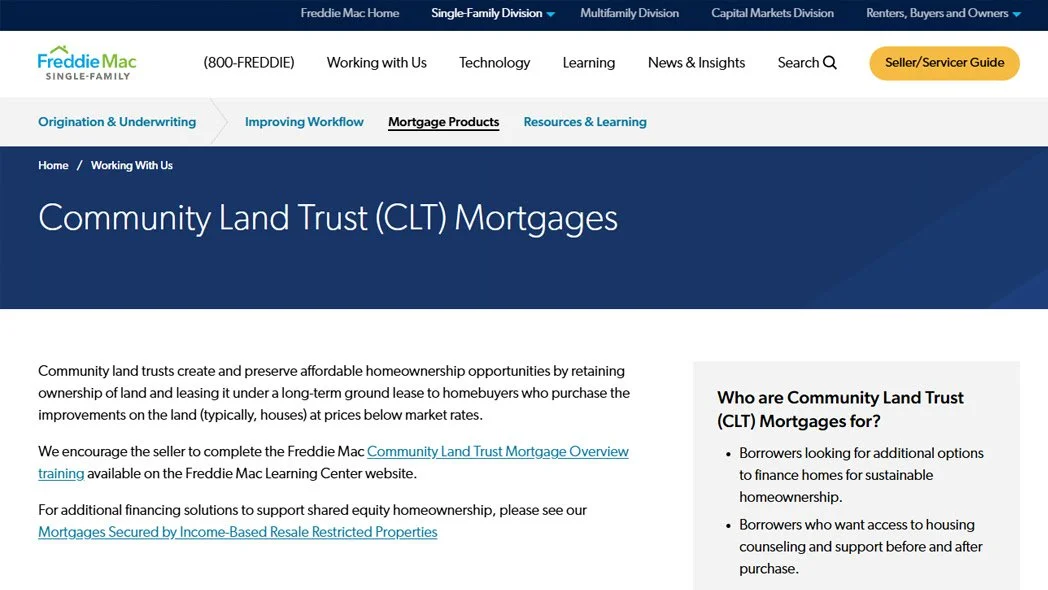
The harder part is finding a lender who actually has experience with CLT transactions. A lender who has never dealt with one before might not even be familiar with the ground lease documents, let alone know how to manage them. That alone can hold up an approval even when the buyer's financials are solid, though that doesn't mean the deal will fall apart. But it does mean that who you borrow from matters quite a bit.
The paperwork side of this process also looks a little different from that of a standard home sale. Most lenders will want to review the ground lease itself, and some will also need a lease rider that meets Fannie Mae or Freddie Mac standards. If a lender you're already pre-approved with runs into problems with the land trust documents, it's worth switching to lenders who have direct experience with CLT transactions in Georgia - and in my experience, credit unions and community development lenders are usually a great place to start that search.
The Hard Limit on Your Resale Price
One of the bigger trade-offs with community land trust homes is that you won't have much control over what you can sell for later on. The trust sets the resale price, and it's based on a formula - not on what the market happens to be doing at that time. In most cases, that number ends up well below what a comparable home would go for on the open market.
That formula exists for a reason. If every seller walked away with full market-rate gains, the affordable part of the equation would start to fall apart pretty fast - and within a generation, the whole model would lose its point.

When you're in the market for a home, a land trust property just isn't the same wealth-building vehicle as traditional homeownership. Most buyers do accumulate some equity over time. That part is real. The growth does have a ceiling, though, and it's a hard limit written right into your contract.
Before you sign anything, be legitimately honest with yourself about what's driving you - whether you want an affordable place to live or whether you mostly want to sell for a profit at some point. If profit is your main motivation, a land trust home probably isn't the right fit. If long-term housing stability is what you're after, though, the resale restrictions likely won't feel like that big of a trade-off.
Plenty of buyers skim right past the resale clause in their paperwork and don't give much thought to what it could mean for their finances years later. It's actually one of the most important parts of how a land trust is structured.
How the Atlanta BeltLine Keeps Homes Affordable
The Atlanta Land Trust is one of the strongest examples of this model working inside a big city, built specifically to keep homes affordable along the Atlanta BeltLine - a stretch of town where property values have climbed at a pretty aggressive pace over the last decade or so. Without some price-stabilizing structure in place, long-time residents would have ended up pushed right out of the neighborhoods they'd lived in for years.
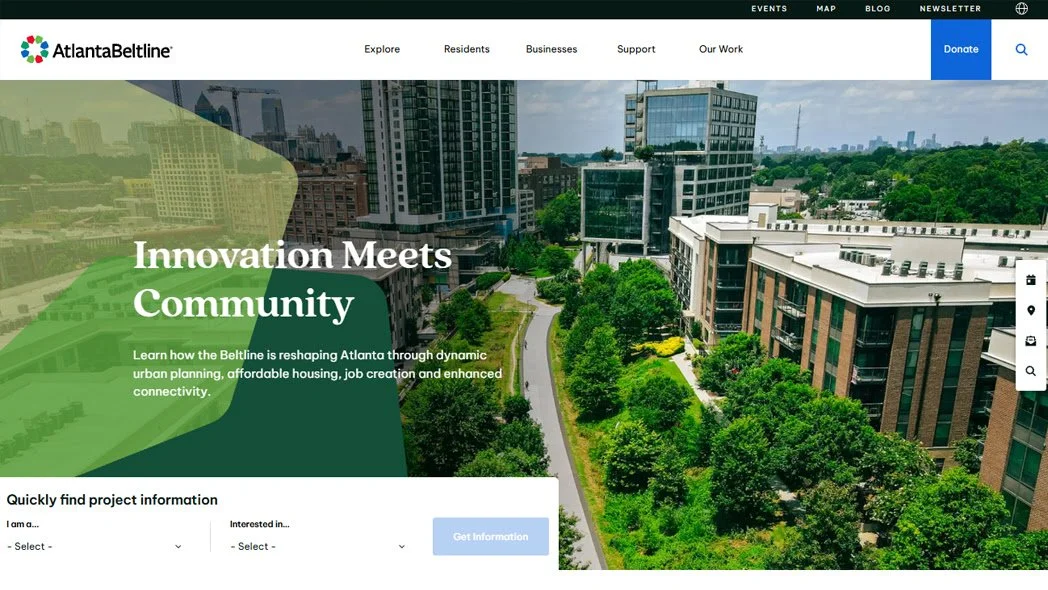
Behind all that legal language, there's a genuine human story. Families in West End, Reynoldstown and other BeltLine-adjacent neighborhoods have actually been able to stay in their homes - and land trusts are the reason why. Those resale limits are there for a reason - they're what make long-term stability possible for the residents who live there. On paper, the terms might feel pretty restrictive, and that's a fair reaction to have.
When property values in a neighborhood jump by tens of thousands of dollars over just a few years, the math stops working for anyone who isn't already wealthy. A land trust was built to break that cycle by keeping a set of homes permanently at income-based prices. The homeowner still builds up equity and still holds the deed - the only condition is that when they're ready to sell, they agree to sell within those same price limits.
Fast growth tends to create genuine problems for the residents who were there first, and Atlanta has seen plenty of that over the past few years. The BeltLine corridor is a strong example of this - market pressure and displacement problems have been very much in play there. The Atlanta Land Trust has been working in that space to give residents a genuine path to homeownership, one that the open market alone just wouldn't give them. Before you sign anything, you should spend some time with the ground lease itself.
Read the Ground Lease Before You Sign
The ground lease is one of the biggest documents you'll ever put your name on, so read every word of it before you sign anything. This document is the foundation of the whole arrangement - it tells you what you're allowed to do with the home and, just as much, what you're not.

Most buyers go right to the price and the closing date first, which makes sense. But the clauses that deserve the most attention tend to be the ones buried a bit deeper down the page. Resale restrictions, income eligibility requirements for future buyers and the fine print around refinancing - these are the parts that are worth slowing down for. With that new-home excitement in the mix, it's very tempting to just skim right past them.
That excitement makes total sense. But many buyers sign before they've read through what the lease says - and it's one of the quickest ways to end up with a home that doesn't quite work the way you had in mind.
The best move is to hire a real estate attorney who has actually worked with community land trust deals before. Not every attorney is familiar with this structure, so it's worth the extra effort to find one who is. The right one will go through the terms with you in plain language and flag anything that could become a headache later. Resale formulas are where an attorney's input is especially worth having - these can put a hard ceiling on how much profit you walk away with when the time comes to sell. That number can complicate how you plan out your finances. Knowing the figure before you sign gives you something more concrete to work with.
Moving to Atlanta?
Yes - a land trust home in Atlanta is legal, well-supported by Georgia state law, and it's a path that thousands of families across the country have already taken. The setup works a little differently than buying a home in the traditional way, of course. But different and risky are two very different concepts.
A land trust home is not the right fit for everybody, which is okay to acknowledge. For buyers whose biggest priority is building long-term wealth through real estate (or eventually selling at full market value), this setup will probably leave them wanting more. That said, if what you are after is an affordable home in a neighborhood that you actually want to live in, those trade-offs start to look more worth it. The resale limits and ground lease terms are there for a reason, and for the right buyer they are a pretty fair exchange for everything they make possible.

You may have come into this with a few nerves. But my hope is that you're leaving with a clearer picture and a better sense of what to ask next. Even a little knowledge in this area can put you in a much better position.
When you're looking for the right home in Atlanta (whether that's a land trust property or something more traditional), the agent that you work with can matter quite a bit. Atlanta is a city where every neighborhood has its own character and its own feel. We know this market well at the Justin Landis Group, and we'd love to show you around it. Whether a quiet suburban area or something a little closer to the city sounds more like you, our team can help point you in the right direction. Get in touch with the Justin Landis Group when you're ready, and let's find you a place you'll love coming home to.