
Does the Atlanta BeltLine Raise Nearby Home Values?
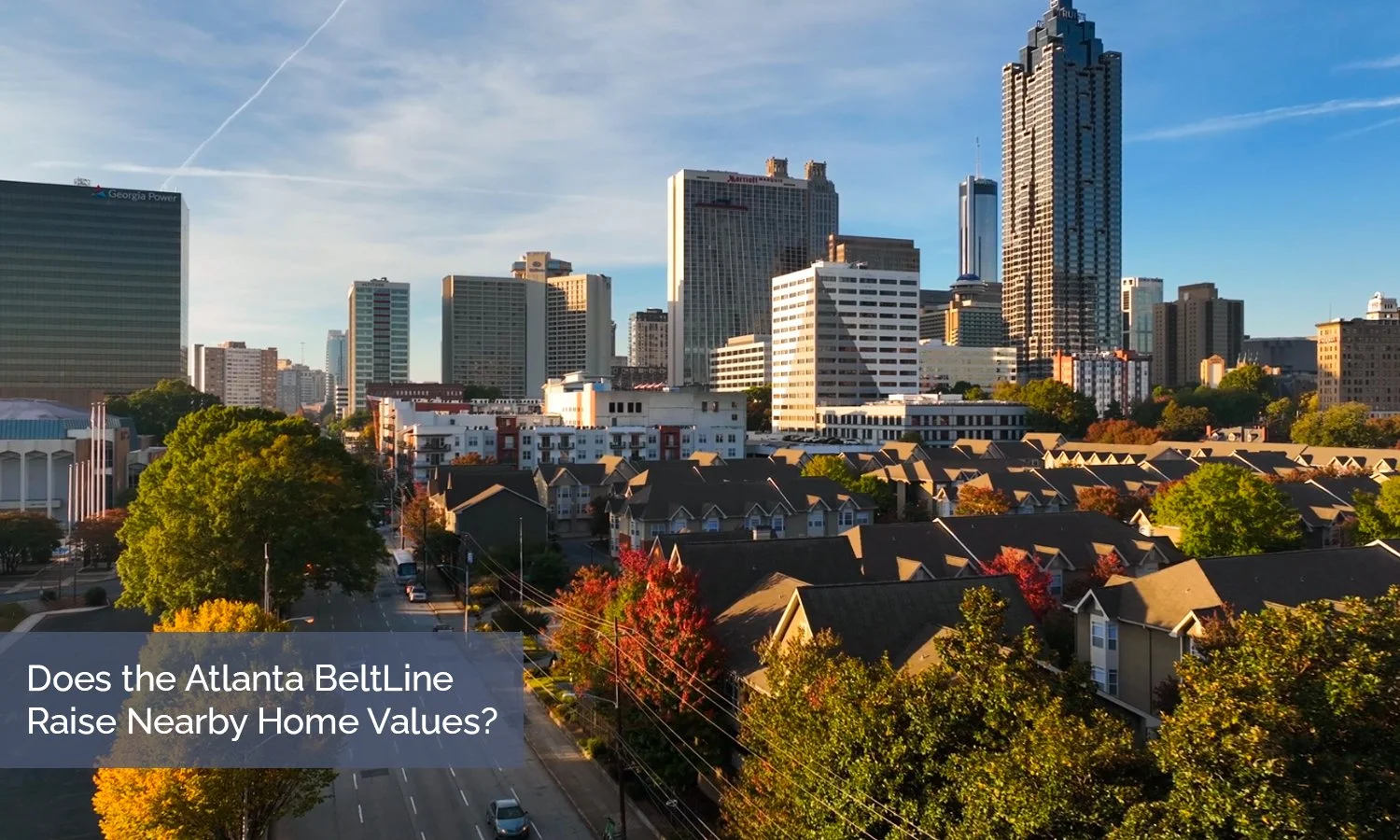
The choice to buy or sell near the Atlanta BeltLine puts competing ideas on the table all at once. Property values, neighborhood change, tax implications and trail access are all part of a choice that can stretch well into the hundreds of thousands of dollars - and the full picture behind any of these factors has more layers than it first appears. From what I've seen, the difference between what's marketed and what's actually happening in these neighborhoods can be pretty wide.
Whether the BeltLine proximity is a genuine financial asset or just an overpriced amenity is a fair question - and the honest answer has moving parts. Where you are within the corridor matters, when you move matters and what you care about matters just as much. Homes near the finished segments have posted gains that outpace the rest of Atlanta by a wide margin. That picture can still change dramatically from one stretch of the trail to the next.
That same appreciation has also slowly pushed the cost of living out of reach for long-time residents who never asked to be part of anyone's redevelopment story. It's one of the more uncomfortable sides of what can happen when a neighborhood gets found - rising property values aren't always a win across the board.
Let's talk about whether the Atlanta BeltLine is pushing up nearby home values!
The Atlanta BeltLine and How It Works
The Atlanta BeltLine is one of the largest urban redevelopment projects in the United States - and it's a very ambitious one. What started as a network of unused railway corridors that once ran through Atlanta's neighborhoods has since been turned into a planned 22-mile loop of trails, parks and public spaces that wraps around the city's central neighborhoods and connects dozens of neighborhoods together.
The BeltLine has been in the works since the mid-2000s, and it's been moving along at a pretty gradual pace. A few sections are finished and see plenty of foot traffic. But plenty of others are still being built out or are only partially open. The Eastside Trail tends to get the most attention out of them - it winds right through Inman Park, Old Fourth Ward and Poncey-Highland.
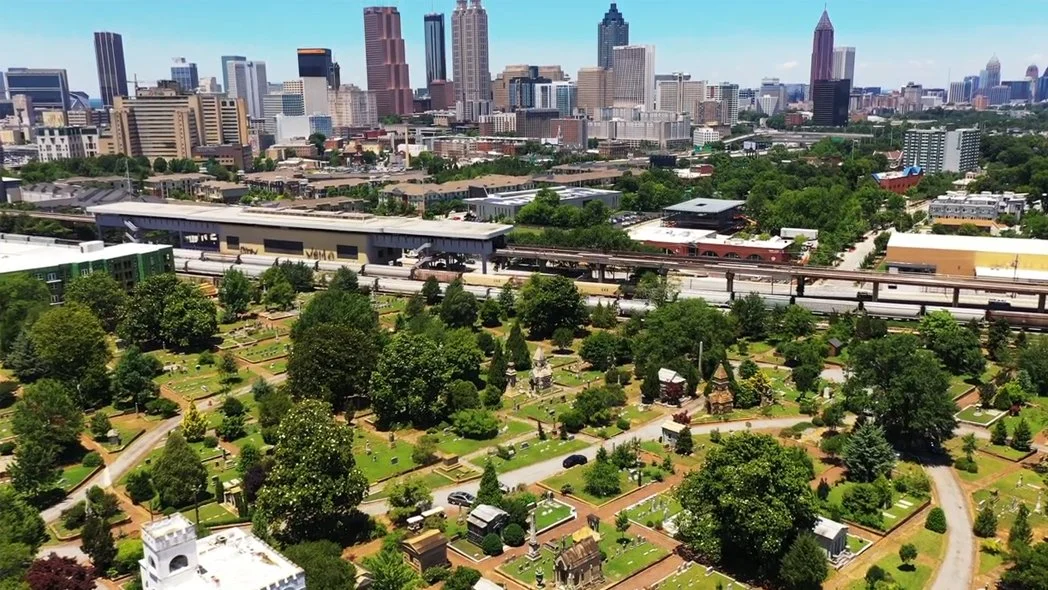
The whole concept is pretty simple - Atlanta residents should be able to walk or bike from one neighborhood to the next without ever needing a car. For a city that spent decades building itself around highways and car culture, that's a real change in how residents get around their own city. The trail also winds through parks, restaurants, art installations and public transit stops along the way, which gives residents more reason to leave the car at home and walk around.
New green spaces, updated streetscapes and mixed-use development have all taken shape alongside the path over the years. Whole sections of the corridor look almost nothing like they did a decade ago - and some of the neighborhoods along it have gone through a pretty dramatic change in that time. With that whole backdrop in mind, we can get into what the BeltLine has actually done to home prices in the surrounding area.
Why Trails Near Your Home Are Worth More
The numbers behind the BeltLine line up with what plenty of Atlanta buyers have suspected for years. Homes within a quarter mile of a finished trail segment have seen price increases of anywhere from 17% to 27% compared to similar homes located farther away. A team at Georgia Tech put that data together, and it's as strong a bit of evidence as we have on the subject. It's also worth mentioning that the study covered multiple neighborhoods across the city, so the findings weren't tied to just one area or one price point.
From a buyer's standpoint, two homes that look nearly identical can be hard to compare when one of them is priced noticeably higher just because it sits along a trail. The price gap is real, and it's pretty hard to rationalize. What the data tends to show over time is that the trail-adjacent home usually holds its value better, which makes the higher entry price feel quite a bit more worth it when you step back and look at the full picture. It's one of those situations where the long-term numbers are in your favor - even if the first cost is a bit more than you expected.

One other detail worth mentioning - the price bump tends to be strongest near trail sections that are already built and open, not ones that are still in the planning or construction phase. A completed trail is what actually drives the value. Buyers care about what they can physically walk, use, and access - a trail that might open in three years just doesn't carry the same weight on a price tag as one that's already there. When you're comparing two properties and one sits near a future trail, it's fair to factor that in. But at a discount - not at full BeltLine-adjacent value.
Why the Eastside Trail Lifted Prices the Most
Not every neighborhood along the Atlanta BeltLine has seen equal gains in property value. The trail sections that are built and see steady foot traffic have pushed prices up the most. But the areas that are still waiting on construction have had noticeably smaller returns.
The Eastside Trail is a pretty telling example of this - it was one of the first stretches of the BeltLine to open, and the neighborhoods right around it (Old Fourth Ward and Inman Park) saw some of the biggest price increases on the entire corridor. At the time, buyers were more than willing to pay a little extra just to be near a trail that was open and ready to use.
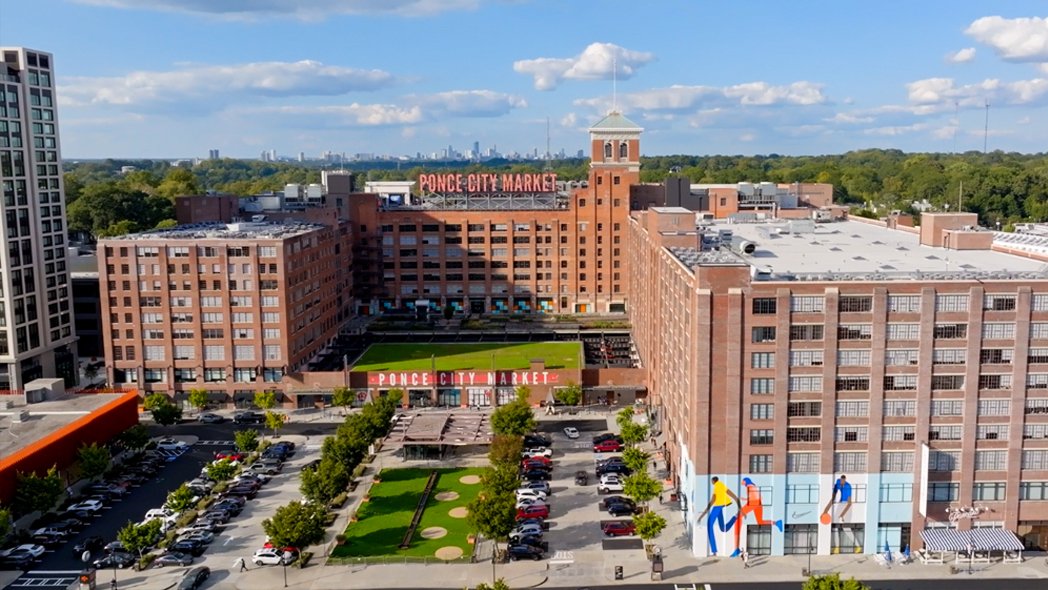
That last detail does matter in practice. A finished trail gives buyers something concrete they can put a value on - it's already built, it's already in use, and it can add something that matters in day-to-day life in a way that's hard to argue with. An unfinished stretch is much harder to put a dollar amount on. That uncertainty tends to hold price growth back in those areas, and they usually stay that way until the work finally gets done.
A reliable way to measure how much the BeltLine has actually shifted prices in a given neighborhood is to look at where that neighborhood falls relative to a completed trail section. Data from sources like the Atlanta Realtors Association or Zillow Research gives you a decent baseline to compare it against. The price difference between homes near a finished segment and those near an unfinished one does a decent job of showing what infrastructure investment does to property values - and in some of these neighborhoods, the numbers are worth a close look.
The Tax District That Pays for Itself
As home values near the BeltLine rise, property taxes tend to rise right along with them.
A portion of that extra tax revenue flows into what's called a Tax Allocation District, or TAD. It's actually an interesting setup - as property values along the BeltLine rise, the extra tax revenue that those increases generate gets set aside and funneled right back into the BeltLine itself. That money goes toward more trail construction, park improvements and the infrastructure that helped push those values as high as they are.
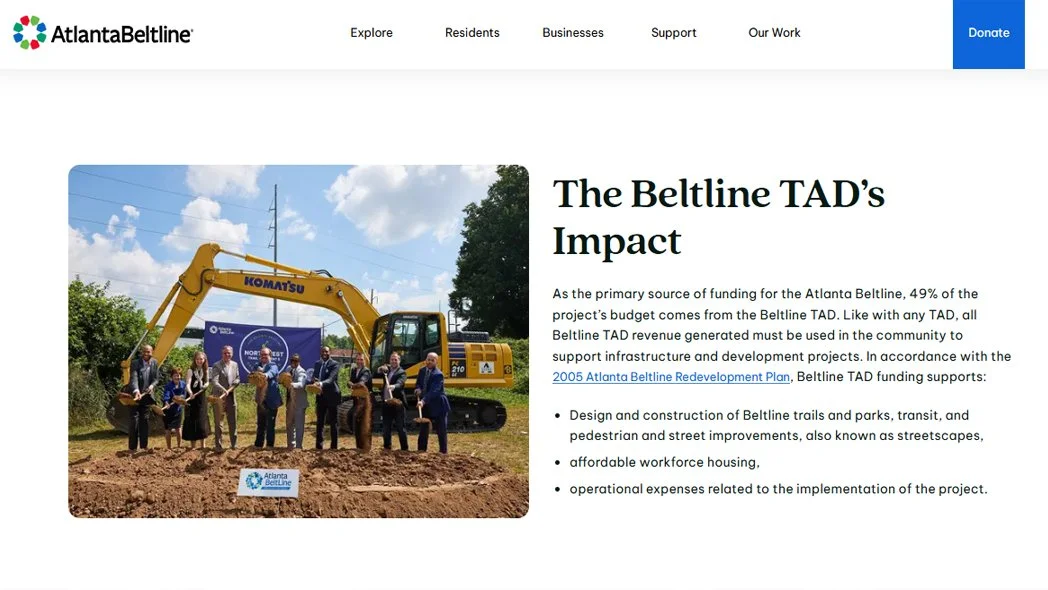
What comes next is where it gets a bit more interesting. That reinvestment draws in more development, which pushes property values even higher and generates more tax revenue to fund the next round of projects - so each phase of growth more or less pays for the phase that follows it. It's a self-sustaining cycle, and once it's underway, it's very hard to reverse.
For homeowners near the BeltLine, both of these points matter - and neither one works without the other. A higher home value is mostly a plus, no question. But it also comes with a higher property tax bill every year. The TAD structure is a big part of why that number keeps going up, because the area's growth is what pays for more of that same growth. The two feed directly into each other.
This also explains why property values in these neighborhoods haven't just gone up and settled at some new high point. Each time a new BeltLine segment opens and fresh development follows close behind it, the whole cycle starts again - more investment, more demand, more value and yes, more taxes right along with it.
The People Who Get Left Behind
The BeltLine has been a positive force for Atlanta - tax dollars invested in the trail have gone toward better infrastructure and extra green space across the city. The hard part is that the same growth behind that funding has also made life considerably harder for some of those who already lived there.
A rise in property values tends to pull rents and property taxes right along with it. For families who have lived in the same neighborhood for decades (whether as homeowners or renters), this sort of financial pressure can make it nearly impossible to stay. Researchers and housing advocates call this displacement, and it's become a very real pattern along the BeltLine's Westside and Southside corridors - the trail's expansion has pushed its way deeper into lower-income communities.

Some critics now refer to it as the "BeltLine tax" - the extra premium that buyers and renters pay just to live near the trail. For a homeowner who's already in the area and ready to sell, that price appreciation is welcome news. For a person on a fixed income or a long-term renter, it's a very different situation.
Thirty years in a neighborhood means something real - there are neighbors you've known for years and your roots run pretty deep. A new trail nearby doesn't change any of that. But a rent increase that doubles your monthly payment might force you out regardless. That tension sits right at the heart of what makes the BeltLine a messy success story. The real question is who actually gets to stay and benefit from what was built - and who gets pushed out to make room for it.
The BeltLine's Race to Keep Housing Affordable
Atlanta BeltLine Inc. has laid out some fairly ambitious affordable housing goals - thousands of units that are to be either preserved or newly built along the trail corridor. What's worth pointing out is that the organization has been pretty honest about why this matters. Property values along the BeltLine have climbed steadily over the years, and that appreciation puts displacement pressure on long-time residents. To their credit, ABI has acknowledged this publicly.
On paper, the effort has some weight behind it. Atlanta BeltLine Inc. and the City of Atlanta have partnered to set aside land for income-restricted units, and dedicated funding has been put in place to back that up. For an urban development project, that's more progress than most of them ever make - plenty of these initiatives never even reach the land-acquisition stage.
The question worth asking is whether any of these programs are keeping up with how fast prices are rising. Property values near the trail have gone up sharply over the years, and affordable housing programs just don't move at the same speed - not even close. Atlanta BeltLine Inc. does put out progress reports, and they're worth reading closely. What you want to look at is the difference between how many affordable units have been built or preserved versus what was promised from the start.
Stated intentions and what actually gets done aren't always the same. Even a well-funded program can still fall short when the gap between market rates and affordable rents grows faster than new units can be added - and this gap has been a persistent problem. The goals written into press releases and planning documents usually read much better than the numbers in the progress reports, and the numbers are what tell the story. Anyone who wants an honest read on how well the BeltLine's affordable housing mission is working needs to weigh those reports more heavily than the stated targets.
Targets are easy enough to set - but delivery is the part that counts.
Does Living Near the BeltLine Pay Off
The BeltLine has an effect on Atlanta home values, and there's plenty of data to back that up. The more interesting question is whether any of that growth actually works in your favor. That can depend on what you're trying to accomplish.
As a buyer, it's worth asking yourself what the trail means to you - because the answer to that does change the choice. A desire to live on a finished trail is a very different goal from wanting to get in early on an up-and-coming area, and they each lead to a pretty different buy. A home near an unfinished segment isn't a bad deal. But the surrounding area could take years to catch up - and you would be paying a premium the whole time for something that isn't quite there yet.

Higher property values mean higher property taxes, and in my experience, that's the part that buyers usually miss when they get excited about how much a property might increase in value. It's a cost that can slowly eat into your returns over time.
For sellers, the situation tends to look a little more favorable - though your timing and where your property sits along the trail will matter quite a bit. A home near a well-developed stretch will command a noticeably higher price than one near a section that's still largely undeveloped.
One more point to keep in mind - the neighborhoods closest to the BeltLine have changed quite a bit in a short amount of time, and the pace of change hasn't been painless for the residents who were already living there. None of that's a reason to pass on a deal. But you should go in with a sense of what the area has been through.
Moving to Atlanta?
The trail does lift home values - that part is well-documented and not up for debate. What's harder to sort out is how those gains actually land for different residents. A long-time renter, a first-time buyer and a homeowner who's ready to sell can all live on the same street, and each of them ends up in a very different position because of it. For the renter, a rising neighborhood can mean higher costs and fewer options. For the buyer, it can mean long-term equity if they got in at the right time. That gap is worth mentioning - and it becomes more relevant as more sections open up and the effects start reaching neighborhoods that haven't seen any of this yet.
Where the trail goes from here will have an effect on what these neighborhoods look like over time. Areas near unfinished segments usually fall a little behind and then close the gap fast once the infrastructure finally arrives. The equity conversation that's been attached to the BeltLine from its earliest days hasn't gone away either. Affordable housing programs are in motion, and some of them have already placed units in corridors where prices have been climbing for years. But whether they can keep pace with the market is still very much an open question. These two storylines are worth following if you want a clearer sense of what's going to happen in these neighborhoods over the next decade.