
How Distance to Atlanta Airport Affects Home Prices
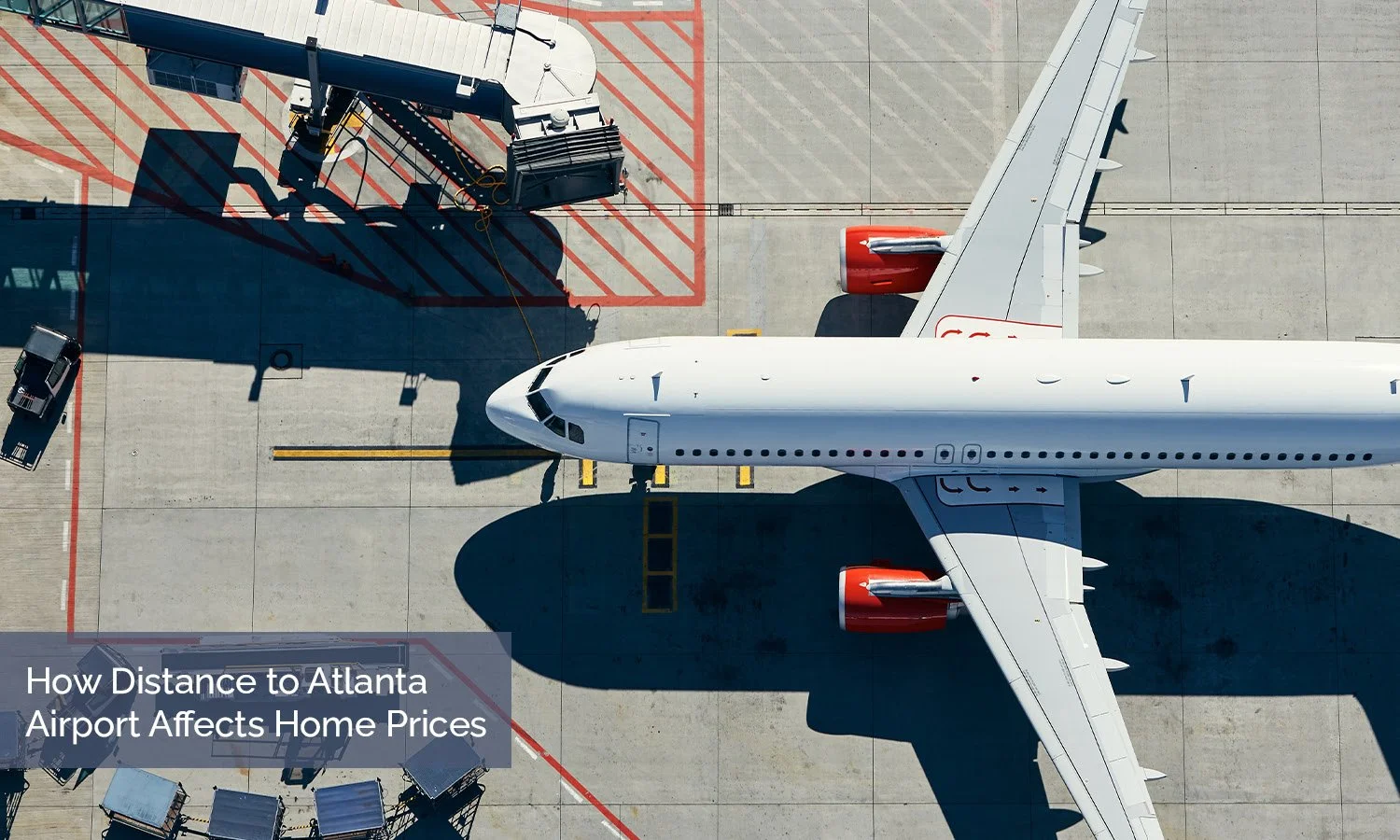
Few home purchases in the metro Atlanta market depend on location quite like one near Hartsfield-Jackson Atlanta International Airport. A home priced at $270,000 in College Park and another at $400,000 in Peachtree City might only be 20 miles apart. But each one carries a very different set of trade-offs that tie directly back to how close they are to those runways.
Most buyers look at square footage and school ratings, but the airport proximity gets treated like a minor footnote in the process. That oversight can cost money - or at the very least it can put a buyer into a noise situation that they never planned for. Research from Lipscomb (2003) found that every extra mile from Hartsfield-Jackson can add roughly $36,000 to a home's value. A number like that probably deserves a much higher place on any buyer's checklist.
The "closer equals cheaper" assumption just doesn't hold up here. Properties near the world's busiest airport actually bring some upsides - faster commutes, stronger rental demand and a direct connection to one of Atlanta's largest employment hubs. Where a property falls on that distance range matters quite a bit, and it can change the math on any given deal.
Airport proximity can work for or against a property's value, and the effect tends to grow over time. It's worth having a picture of what you're up against before an offer goes in on anything in this corridor. Most buyers don't give it the weight it deserves until they're already under contract, and that's not a great position to be in.
Let's get into how your distance from Atlanta Airport could affect your home's value!
How the Airport Shapes Atlanta Home Prices
The neighborhoods surrounding it feel that weight every day, and the local housing market is no exception. Home prices in this area range quite a bit based on how close you are to the airport. There are a handful of forces all pulling in different directions at once to make that happen.
The airport alone directly employs over 63,000 workers. That figure doesn't even count the restaurants, hotels, warehouses and logistics businesses that have moved in nearby just to stay close. These workers and businesses need somewhere to eat, sleep and live. All that concentrated economic activity puts pressure on housing demand in the surrounding area.

Proximity to a big employment center means shorter commutes for workers. Working at the airport or somewhere in one of the industrial corridors on Atlanta's south side makes a nearby home very appealing. That appeal shows up in what buyers are willing to pay. Commute time is something that buyers quietly weigh when they're house hunting - even if it never comes up in the conversation.
Noise is also part of the picture - homes directly under flight paths usually sell for a bit less than similar homes farther out. That said, noise is only one part of what makes distance a nuanced topic in this area. The bigger story is how economic activity, road access and land use patterns all spread outward from the airport. Each of them ends up pulling prices in different directions depending on how far out you go.
Noise Zones Can Lower Your Home Sale Price
The FAA actually publishes noise contour maps that show which neighborhoods get hit with the most aircraft noise - and any home that falls within those boundaries could sell for 10% to 20% less than a similar home just a few miles away.
A 10% to 20% gap is no small number, and it all traces back to one single cause - persistent noise.

The FAA has its own way of measuring sound exposure around airports - a unit called DNL, which stands for day-night average sound level. Homes that fall into the higher DNL zones are usually the ones that take the hardest hit at resale. Atlanta has put money into sound insulation programs over the years to help homeowners in these areas - double-pane windows and other upgrades that are meant to quiet the noise down inside. Those programs do help in day-to-day living. But they don't close the price gap when it's time to sell.
For homeowners already under a flight path, the frustration makes total sense. Buyers will see the noise zone on a map and work it into their price, even if your home has been insulated and updated. It's not about the condition of the house - it's the location data that buyers and their agents pull up before they ever set foot inside. Appraisers will weigh this too, so the discount tends to show up no matter how you sell.
The contour maps are worth pulling up on your own. The FAA updates them from time to time, and Atlanta's mapped zones have expanded quite a bit over the years as the flight traffic has grown.
The Sweet Spot for Home Buyers
Once you get past the noisiest flight corridors near the airport, home prices start to look pretty different. Places like Peachtree City, Fayetteville and parts of South Fulton all land in a price range that still puts you within a basic commute of the terminal - and well away from the nonstop noise overhead. That combination of distance and accessibility is a big part of what drives prices up in these neighborhoods.
Plenty of the buyers who settle in this area started their search closer to the airport and crossed it off their list because of the noise. Others went farther out and eventually decided the commute just wasn't worth it - this middle ground is where a chunk of them land. That steady stream of demand is what keeps prices competitive.

Before settling on a neighborhood, do yourself a favor and take a hard look at your actual commute. The straight-line distance to Hartsfield-Jackson doesn't always match up with your drive time once Atlanta traffic gets involved. A home just a few miles out can still add 45 minutes to your morning commute if it puts you on I-285 during rush hour. Mapping your drive at the time of day that you'd normally be heading out can flip which neighborhoods even make it onto your list.
Some places in this price range sit just far enough from the main highway corridors that the commute ends up being surprisingly rough. Others drop you right next to a connector road that actually cuts some time off the drive. The difference in day-to-day quality of life between those two scenarios can be pretty stark - and it's almost never something that a listing description will mention.
The Real Story Behind These Airport Area Homes
College Park, Hapeville and East Point are all pressed right up against the airport, and the home prices in each one of these neighborhoods make that pretty obvious. For buyers who are in aviation or who spend the better part of their day near the terminals, that proximity is actually the whole point - it's a deliberate trade-off instead of something anyone stumbled into by accident.
The "cheap because of noise" narrative only tells part of the story, though. All three neighborhoods have attracted revitalization investment over the past few years, and some of these blocks are well into transition. New construction, renovated housing, and a visible uptick in local business activity have all started to change what these areas feel like on the ground.
That investment brings an extra wrinkle to how buyers read value in these areas. A lower price tag doesn't always carry the same weight - sometimes it's a direct reflection of the aircraft noise and a shortage of suburban-style amenities, or it might just mean the neighborhood is still mid-transition with more room to grow. In some cases, it can be a bit of both. That balance tends to change from one street to the next.
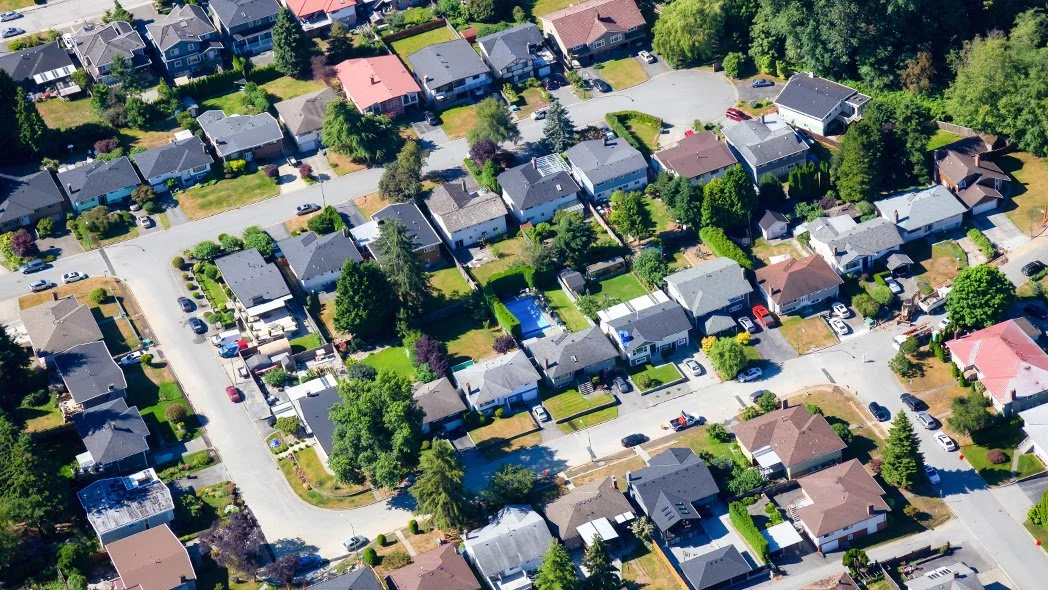
Buyers who do their homework will usually find that the reasons behind a neighborhood's price point break down quite a bit differently - that variation is right where some of the more interesting deals are. A block that reads as rough on a quick drive-through can look very different once you go through the recent sales, permit activity, and what's been opening up nearby.
These three neighborhoods have quite a bit more going on beneath the surface than the price per square foot alone will tell you, and all that legwork is well worth it.
Flyers Pay More for a Short Drive
For anyone who travels for work week after week, airport proximity is less of a preference and more of a flat-out necessity. Consultants, account managers and other pros who catch that early Monday morning flight usually treat it the same way most home buyers treat school districts - it's just part of the math.
It's worth asking how many hours a year you actually spend driving to and from the airport. At 40 weeks of travel with a 45-minute drive each way, that works out to 60 hours a year just behind the wheel - before you've even left the country or closed a single deal.

That number matters, and it's a big part of why frequent flyers are attracted to the South Atlanta suburbs - a 15-minute drive to Hartsfield-Jackson is very manageable from areas down there. For that type of buyer, a shorter airport commute is part of the compensation package. Put a dollar figure on what your time is worth, and the numbers tell a different story.
That demand shows up directly in the price premium across these areas. Sellers in this market know their audience well, and the pricing gets set accordingly. For anyone who flies for work and is picking between two homes at a similar price point, the one closer to the airport will usually cost less in the long run - just not on paper. The savings show up in the hours that you get back every year. Add that up over 5 or 10 years in the same home, and the math starts to look very different. Time is a resource that you just can't get more of. For frequent travelers, the right address goes a long way toward protecting it.
How Flight Paths Can Lower Your Home Value
Hartsfield-Jackson is already one of the busiest airports in the world, and it's nowhere near done growing. Expansion talk, new runway proposals and rerouted flight paths have all been floated over the past few years - and any one of them has a chance of quietly making neighborhoods noticeably noisier over time.
It's something buyers underestimate. A home that's outside a noise contour could fall inside one after a new runway gets built or a flight path gets adjusted. Those boundary lines aren't fixed - they can move without much warning, and they can be hard to research after the fact.
The FAA does publish flight path maps, and they're legitimately worth a look before you finalize anything. With a property address in hand, you can cross-reference its location against the noise contours and any proposed changes already in the pipeline - it takes a bit of effort to get there. What you get out of it is a much sharper picture before you commit - and in my experience, that extra step tends to surface details that can really change what you choose.

The distance from the airport is only part of what you should think about. The flight path locations matter just as much - and those paths have a long history of change. A neighborhood that feels comfortably outside the airport's reach could look very different five or ten years from now if any expansion moves forward. That feeds directly into resale value over time as well.
Flight path noise is a problem that's nearly impossible to undo once it's there - and the best time to deal with it is well before you ever buy a property.
What Should You Check Before You Buy
The best tip on this list is to visit the property at a few different times of the day. Noise levels can shift quite a bit between morning and evening. A quiet midday visit gives you a very different sense of the neighborhood compared to how that same street sounds at 6 am on a Monday.
The FAA's flight path data for that address is also worth looking up. Flight corridors do get adjusted over time, and a home that sits just outside a busy path at the moment could wind up right under one a few years from now. That sort of research takes less than an hour, and it can clarify how you feel about a property.
Talk to the neighbors before you sign anything. The residents who already live there will tell you specifics that no listing description ever will - like how the noise level has shifted over the years or if the airport's expansion plans have everyone in the area a little bit nervous about what's coming.
Finally, ask your agent to pull up comparable sales data for homes at a similar distance from the airport. Resale values in these neighborhoods can move in some pretty unpredictable directions, and without that data in front of you, it's not hard to come away with the wrong idea about what you're paying for. A bit of extra due diligence can go a long way toward being confident that what you're paying is actually worth it.
Moving to Atlanta?
Airport proximity is one of the most layered topics in Atlanta real estate, and it doesn't get nearly the attention it deserves from buyers who are just starting out. Moving pieces are wrapped up in it (noise contours, commute trade-offs, neighborhood revitalization, long-term changes to the flight paths), and you can see why it ends up as an afterthought. The distance from Hartsfield-Jackson is actually one of the first filters worth putting in your search.
With a topic like this, there isn't one right answer that works for everyone. Buyers find themselves in the same tough position - they skip the research, see a price that looks decent and just figure that a fair price means a fair deal, without a second thought about what's behind that number.

That research gets a whole lot easier with somebody in your corner who already knows how all these pieces fit together. Atlanta is a big city with ground to cover - every neighborhood has its own personality, its own price range and its own connection to the airport. At The Justin Landis Group, we work with buyers all across the metro, from the quieter suburbs to the neighborhoods right in the thick of it. Get in touch with us when you're ready to start your search with actual help behind you, and let's find you the right home!