
Atlanta Short-Term Rental Permits by Neighborhood
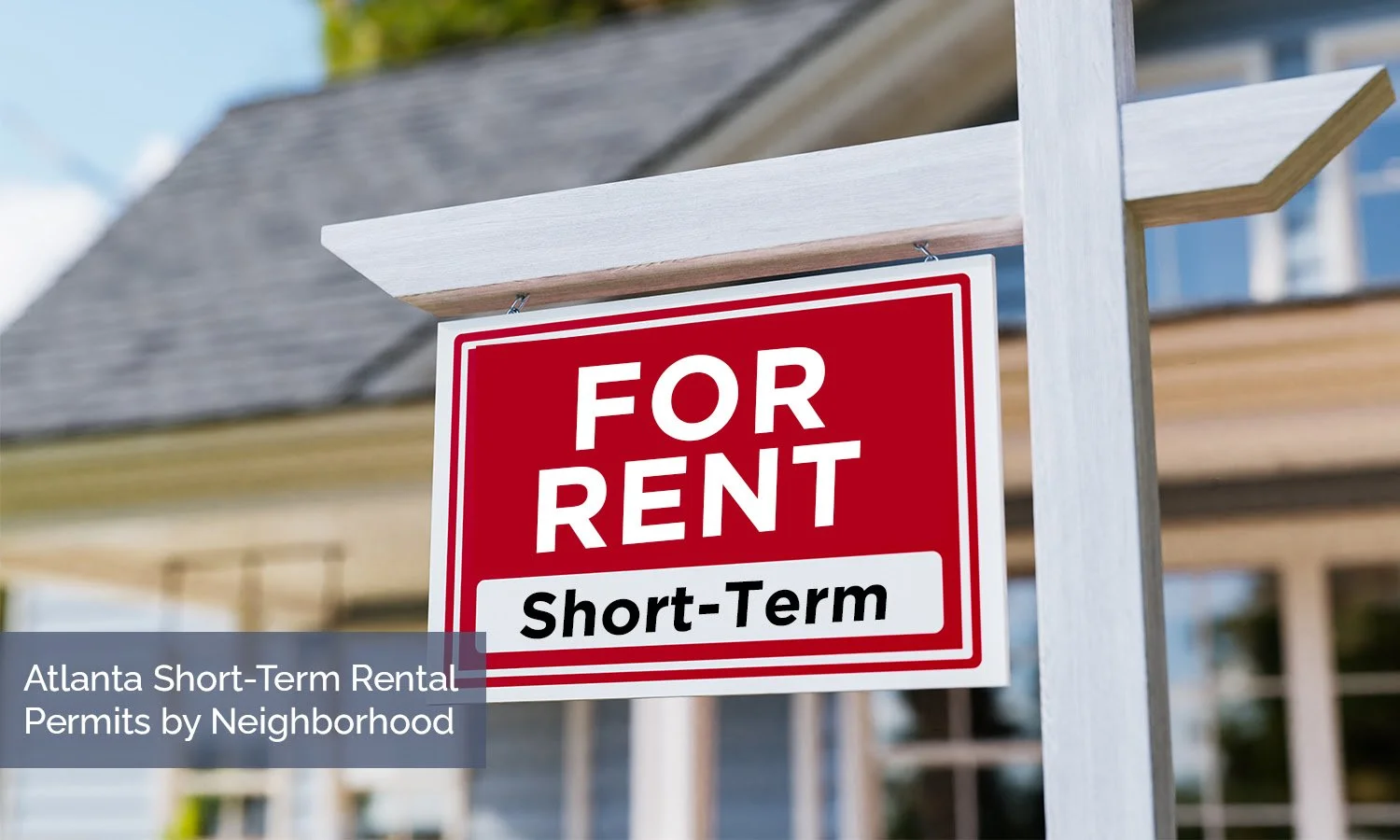
Atlanta's short-term rental market runs on a lengthy list of laws. The basic idea is easy enough to follow - list a property, take some bookings, pocket your money and repeat. The compliance side is a fair bit more involved than that.
Atlanta makes every host get two separate licenses in place before even a single booking can go live - a Short-Term Rental Certificate and a business license. Quite a few hosts skip one or both licenses and list anyway - and that's where it gets expensive. Fines for unlicensed operation start at $500 per violation per day, and that's usually not something that you find out until it's already too late.
The permit side of it will add another layer because eligibility doesn't follow a single citywide standard. Zoning designations, owner-occupancy conditions and neighborhood-level planning bodies all have a say in what a given property can and can't legally do - and the layers add up. A property that passes city zoning checks might still run into extra restrictions from a historic overlay district or a recent ordinance specific to that neighborhood. Atlanta already has over 9,500 active STR listings per AirDNA's May 2026 report - and the laws for each one can look pretty different from parcel to parcel.
The right permits and a clean compliance record from day one are the best protection for your investment - and they're what keep your listing active long-term. Hosts who manage this early stay away from the mandatory one-year application freeze that comes with an enforcement citation, and they don't give the city a reason to pull their license altogether. The fees and paperwork do take a little time to work through. But they cost far less than the alternative.
Let's get into Atlanta's short-term rental permits - neighborhood by neighborhood!
The Two Permits Every Atlanta Host Needs
Before we even get into neighborhoods, every Atlanta host needs to have two permits in place. One is a Short-Term Rental Certificate, and the other is a separate business license - and they come directly from the city. Neither one is something that you can skip or work around.
Atlanta's Short-Term Rental Certificate goes through the Office of Buildings. The application itself asks for basic property info and proof that your space meets the city's health and safety standards. Most of the process can be completed through Atlanta's online permitting portal - just know that a couple of steps might still need an in-person visit to the office.
The business license is its own separate step, and it's one that first-time hosts wind up missing - it has nothing to do with your rental certificate (the two run very independently of each other), so you'll need to submit a separate application through the city's business licensing division. That means two different applications and two different approvals. Don't assume one covers the other.

Atlanta now receives host data directly from apps like Airbnb - it's a pretty recent development that's changed the game considerably for hosts in the area. The city now has a much better sense of just who rents out properties and where. If your paperwork isn't in order, you're at risk because the city has the tools to track down unlicensed listings, and they do put them to use.
Permits need to be in place before your listing can go live - and yes, that does mean a bit of extra paperwork on the front end. It's a small price to pay compared to a city fine or a listing that gets pulled down after you've already launched.
What the Owner-Occupancy Rules Mean for Investors
Atlanta's short-term rental policies aren't a one-size-fits-all situation. The city heavily leans toward owner-occupants (hosts who actually live in the property that they're renting out), and if you fall into that category, the permit process will be a whole lot easier than it would be for a host who doesn't. That distinction matters more in Atlanta than it does in other cities, and it's one of the first details to pin down before going any further with a short-term rental plan.
Buying a property in Atlanta purely as an investment is worth paying close attention to. Non-resident hosts face stricter restrictions than owner-occupants do, and in some parts of the city, a non-owner-occupied rental might not even be allowed - it can all depend on where the property is.

For out-of-state investors who had already closed on an Atlanta property with short-term rental income in mind, this creates a real problem. The numbers made sense, and the platform projections looked promising. But the local regulations told a very different story. It's a financial issue that deserves an honest look before any deal ever gets to the closing table. This comes up all the time, which is why doing your research early is so worth it.
Owner-occupancy is arguably the main piece of Atlanta's short-term rental policies. Past that, where your property is located within the city can add another layer. That part of the equation does come down to zoning. Two properties a few blocks apart can end up with very different results, so location within Atlanta matters at a granular level.
What Your Zoning Type Means for Permits
The first step in any short-term rental application is to check your property's zoning designation. Atlanta's zoning code runs on labels like R-1, R-2 and a handful of mixed-use classifications. Each one has its own set of laws about what a residential property can and can't be used for.
R-1 and R-2 are single-family designations, and they carry tighter short-term rental restrictions than most other zone types. These are the quieter residential corners of Atlanta, and the city treats them accordingly with stricter regulations. Mixed-use corridors are a different story - property owners in those areas usually have more flexibility.
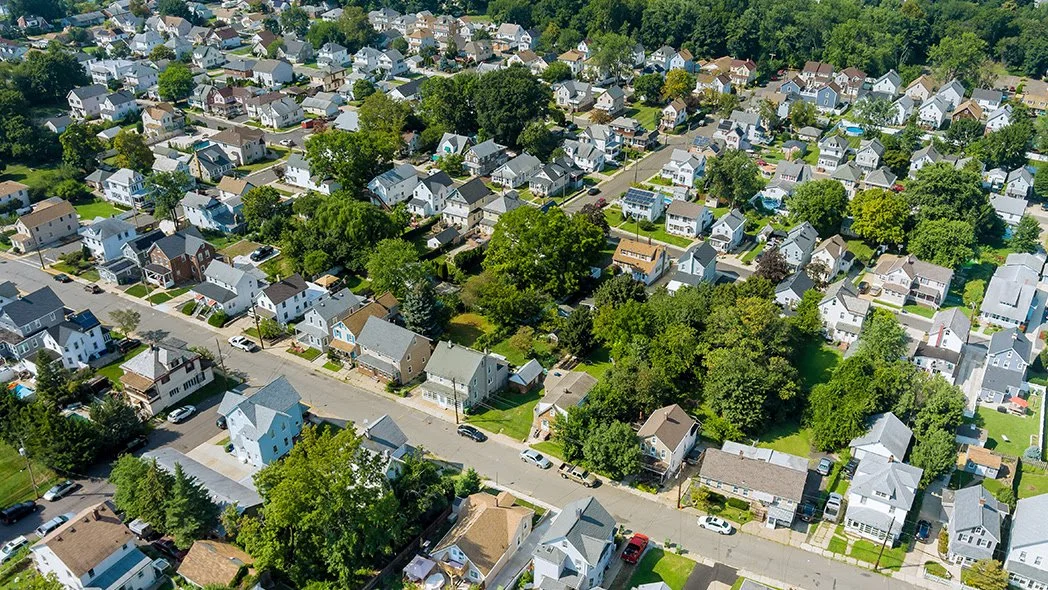
Atlanta's zoning laws can vary quite a bit from one neighborhood to the next - that's where it gets more nuanced. A property in the Old Fourth Ward along a mixed-use corridor might qualify under laws that just wouldn't apply to a nearly identical home in a more residential part of Buckhead. Grant Park is an example of this because it covers a number of zoning types. Two houses on the same street can fall under quite different permit categories based on how each parcel is classified.
Atlanta's zoning map is publicly available, and it's not nearly as hard to read as it looks. A quick address search through the city's online portal will pull up the zoning designation for your property. From there, you can match that label against Atlanta's short-term rental ordinance to see what actually applies to you. That two-step process alone will save you a headache before going any further in the application.
NPUs Have Real Power Over Local Rentals
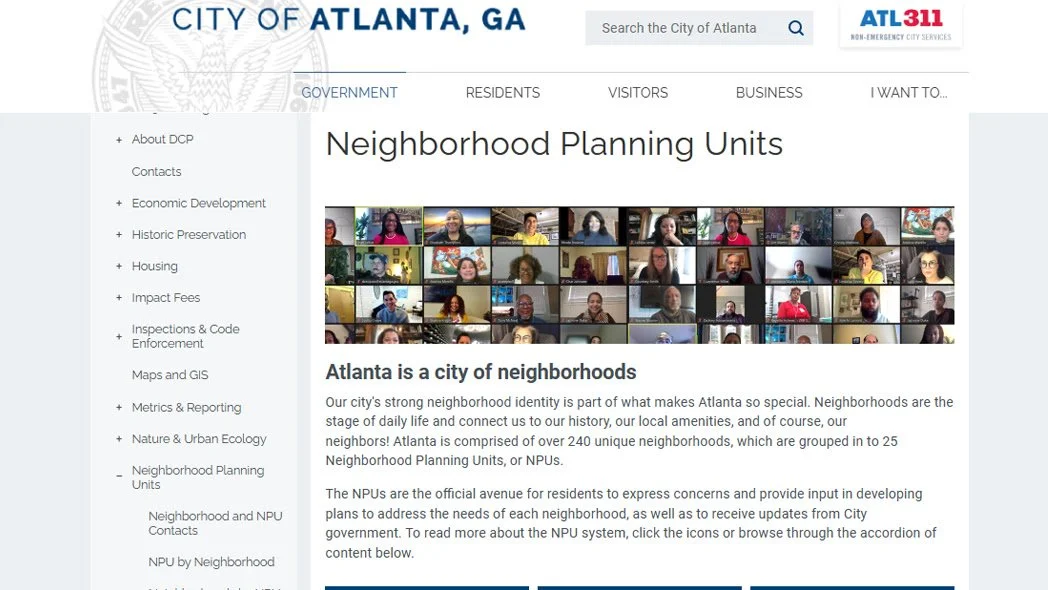
Atlanta is divided into 25 Neighborhood Planning Units (usually called NPUs), and these groups have genuine influence over how short-term rentals are handled at the local level. Each NPU is a resident-led group that meets on a set schedule to weigh in on land-use decisions in its corner of the city. The city doesn't technically have to follow their recommendations. But those recommendations do carry real weight with city officials. That distinction matters quite a bit when it comes time to get a permit approved.
For short-term rental hosts, this carries real consequences. An NPU has the power to push for stricter limits than the base zoning would otherwise allow. A neighborhood might sit in a zone that technically permits short-term rentals - and yet the local NPU may have already lobbied hard for tighter restrictions on density, parking or occupancy limits. Those kinds of block-by-block differences almost never show up in a standard zoning search, which is why some extra legwork is worth your time.
NPU boundaries are publicly available on the City of Atlanta's website, and the meetings are open to anyone who wants to attend. For anyone considering a property, attending one of those meetings is a smart move - you'll get a far more honest feel for how that neighborhood actually stands on short-term rentals.
The past meeting minutes and prior recommendations are also worth a look - and in most cases, they're available to the public. Spending a few hours with them can reveal a lot about whether a neighborhood has pushed hard for short-term rental restrictions or has largely stayed quiet on the issue. That research realistically takes an afternoon.
Some Atlanta Neighborhoods Have Extra STR Rules
A handful of Atlanta neighborhoods have extra steps on top of the standard permit process. Virginia-Highland, Inman Park and parts of Midtown are some of the most familiar examples - each one of these areas has an active Neighborhood Planning Unit that watches short-term rental activity pretty closely, and a few of them also fall within historic district boundaries, which layer on an extra round of review on top of everything else that you're already working through.
Historic district protections are worth a close look if your property falls within one of Atlanta's designated areas. The laws don't automatically block short-term rentals - and for most owners, that's legitimately news. What they do restrict is what physical changes you're actually allowed to make to the property and how Atlanta's zoning code ends up classifying your use of it.

Midtown operates a little differently from most other parts of the city - the zoning picture is far more layered and involved. Mixed-use corridors, residential pockets and commercial zones can all sit right next to each other, and the laws that apply to each one are very different. Properties in that area can fall under zoning categories that have their own separate set of conditions attached to them.
Inman Park and Virginia-Highland are two neighborhoods to flag early in your research - both have active NPUs with a history of opposition to permits in some of the residential blocks. That doesn't mean a permit's out of reach in either area. But the community review process does carry more weight there than it would in other parts of the city. If your target property sits in one of these neighborhoods, it's worth knowing that before you get too far into the process.
Atlanta Has Tightened the Rules Each Year
Atlanta has stepped up its short-term rental enforcement quite a bit over the past few years, and the whole process has become far more organized along the way. The city now works directly with sites like Airbnb and Vrbo to pull the host data and match it up against the city's permit registry. What that means for unlicensed hosts is that they're not nearly as invisible as they used to be - the city now has a pretty accurate picture of who's permitted and who isn't, and they're actively following through on it.
The fines are steep, too. Atlanta hosts have been hit with penalties reaching $500 per day and per violation. If a listing stays active without coming into compliance, those violations pile up fast, and what starts as a single fine can quickly become a whole pile of them.

Plenty of hosts convince themselves that enforcement is lighter in their part of the city or that their listing is too small to draw any attention. That line of thinking tends to fall apart very fast. A single complaint from a neighbor (just one) is enough to trigger an inspection or land you a citation. It doesn't need to be a formal audit or a citywide sweep. One frustrated neighbor is legitimately all it takes.
On a purely financial level, the permit fee is actually pretty modest compared to what an enforcement action could cost you. It's not a hard calculation to run. Hosts who try to sidestep the process almost never come out ahead financially - and from what I've seen, they spend a fair chunk of that time with unnecessary anxiety about it too.
Atlanta is actively finding unlicensed listings now. The systems used to flag those hosts are already in place, and the city intends to use them.
Check Your Property Before You Invest
The first move worth making (before a listing setup or any application fees) is to pull up your parcel's zoning through Atlanta's Office of Buildings. It's free, and it takes just a few minutes.

Zoning is the starting point. On top of it, your neighborhood's NPU stance and the city's owner-occupancy laws come into play - and all three of them need to line up before you can move forward. A property can pass the zoning check and still run into problems if the local NPU has its own extra restrictions or if you're not planning to live on the property yourself. Each one is a separate layer with its own requirements. That combination is what tends to slow most applicants down.
The easiest strategy is to treat it as three separate boxes to check, not one combined process. Go through them in order (zoning first, then owner-occupancy status and then your NPU's position) and move on from there.
The Atlanta Office of Buildings is the best place to start your research. Their records let you pull up any parcel and see what zoning category it falls under. From there, you can match that category against the city's short-term rental ordinance to find out what's actually allowed on your property. My recommendation is to do this before you ever fill out an application - it's the only reliable way to know if a permit's even worth going after.
Moving to Atlanta?
The permit situation here looks different in every neighborhood (and the layers to it, factors like zoning restrictions, owner-occupancy conditions and NPU positions, all work together in ways that don't always make immediate sense) even for experienced real estate investors. None of it is impossible to work through once you have a picture of what you're up against.
Part of what makes Atlanta's process a bit tough is that the laws can change from one street to the next. A property that's eligible in one part of town might not be in another, and what your neighbor does with their home doesn't tell you much about what you can do with yours. You should pull your parcel data, look at the zoning map for your area and see where your NPU stands on short-term rentals before you put any money into the idea.

Hosts who check their parcel, look into their neighborhood's planning history and get their permits in order before they list - those are the ones who build something that actually lasts. Atlanta doesn't give you a second chance on this one. A missed step early on can set you back by weeks or more, and in some cases, it can disqualify the property entirely.
The extra effort to get it right from the start is usually worth it.
Get in touch with the Justin Landis Group, and we'll help you find your place in this city.