
Charlottesville vs Richmond for Home Buyers in 2026

A move between two cities is never just a financial question - career goals, lifestyle hopes and a very real fear of making the wrong call all come into play. For buyers torn between Charlottesville and Richmond, that pressure runs especially deep. Virginia has plenty going for it in both cities. But each one draws a very different type of buyer at a very different price point.
The difference between these markets runs way deeper than median prices, though. Inventory levels, job market composition, suburban trade-offs and a steady wave of remote migration from Northern Virginia and DC have all changed what buyers are actually up against when they put in an offer in 2026.
The city that you choose will affect your commute, your equity growth and how easy (or hard) it'll be to move again in five to ten years. Those factors can compound quickly. Every market also has its own seasonal rhythms, its own neighborhoods where appreciation runs strong and its own balance between location and square footage.
Most buyers treat this as a straight price comparison, and from what I've seen, it tends to leave them disappointed - either because they overpaid for a prestige address that had nothing to do with their day-to-day life or because they didn't give enough credit to just how much the lifestyle side drives long-term satisfaction. Cities deserve a close look - just not for the same reasons and not for the same type of buyer.
Let's talk about both cities so you'll find your perfect home in 2026!
How Home Prices Vary in Both Cities
For most buyers, price is usually the first big question that comes up as you start comparing Charlottesville and Richmond. Most Charlottesville homes land somewhere in the $450,000 to $550,000 range, and plenty of them go well above that. But Richmond covers a much wider spread of price points - which means there's room to find something that fits a tighter budget.
That gap can mean quite a bit depending on where you are in your home-buying process. For first-time buyers especially, the difference between a $300,000 starting price and a $500,000 one can literally be what stands between qualifying for a loan and not qualifying at all. Richmond just gives more buyers a viable path into the market.

The University of Virginia is a big part of why Charlottesville prices are what they are. Between the faculty, the staff and the wider community around the university, there's a reliable pool of buyers who are actively looking for housing - that demand doesn't let up at any time of year. Charlottesville has also built a genuine reputation as one of the more desirable places to live in Virginia, which only puts more pressure on an already competitive market. Put those two factors together, and prices have only had one direction to go.
The more personal question (and probably the one that matters most here) is if that price premium lines up with what you need from a home. For anyone whose work and life are already rooted in Charlottesville, the extra cost for the location probably makes sense. A location premium is only a premium if you don't actually need the location.
For buyers who have a bit of flexibility in their budget, Richmond's wider price range can make your money go much farther - and without sacrificing much in your day-to-day lifestyle. The gap in quality of life between the two cities is much smaller than the gap in price, and that alone can be a pretty strong reason to give Richmond a look.
How Supply and Competition Shape the Search
Charlottesville is a great place to live - and plenty of locals agree. The problem is that it doesn't have much room to grow. The mountains and rural land wrap tightly around the city and make it pretty hard for builders to add new homes at any scale. With that limited footprint to work with, the number of available homes stays pretty low and puts buyers in a tough position the minute they find something they want.
In a market like that, buyers lose out on one home after another - and for plenty of them it just comes with the territory. Most will place two or three bids before one finally sticks. After enough of that, the repeated rejection starts to wear on buyers, and it tends to push them to stretch their budget a bit more than they first planned or to walk away with something that wasn't quite what they had in mind. I see it play out with buyer after buyer in that market.

Richmond is a different story altogether. The metro area has a much bigger pool of homes to draw from, and new construction has room to grow at a steady pace. For buyers, this translates to genuine options at almost any point during their search - and actual choices at any stage of a home search are worth more than they usually get credit for.
More options change how the whole experience feels. Buyers in Richmond don't have to race to get a bid in before the weekend is over - they can slow down and actually compare what's available. That extra breathing room matters - it gives buyers a chance to be more deliberate, to walk away from something that doesn't feel right and to feel more confident about the choice they wind up with.
A lower price tag tends to get most of the attention in these conversations - and fair enough. What doesn't get talked about as much is the ability to shop without all that non-stop pressure over every choice. That part has genuine value on its own.
How to Pick the Right Richmond Suburb
Henrico, Chesterfield and Midlothian are three pretty different places to put down roots - the price points can vary quite a bit, the school districts are all different, and each one puts you at a pretty different distance from downtown Richmond.
A home in Midlothian can check every last box on your list - a great price, schools and a neighborhood. But a longer commute tacks on extra time and fuel costs to your week, and it does that week after week. Henrico gets you much closer to the city's core. That closeness changes what a home is worth to you on a day-to-day basis.
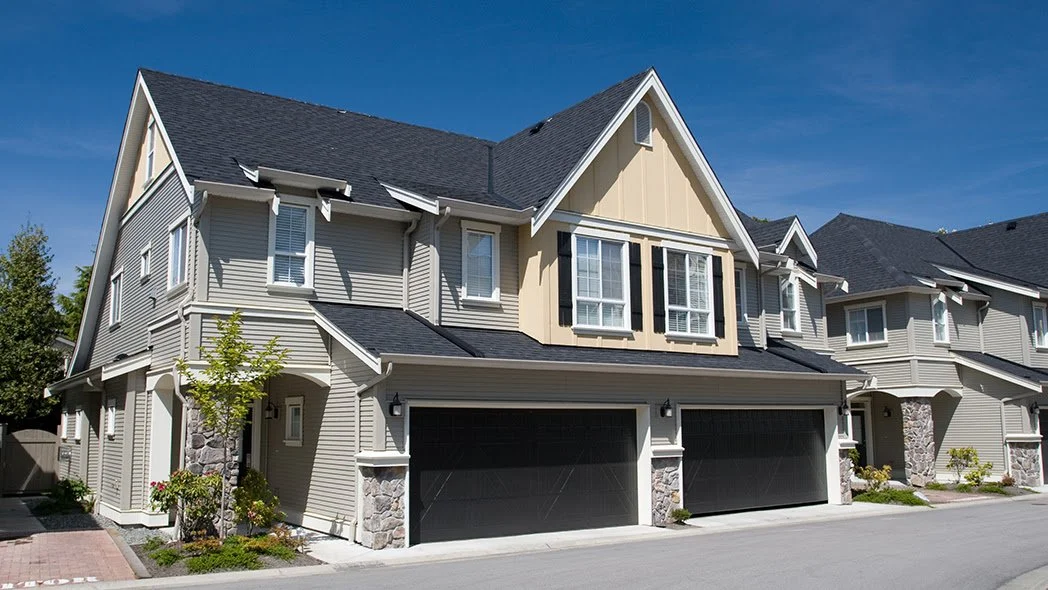
Even for a single home, it's worth doing the math on how much your suburb choice alone can move your monthly payment. A comparable home in Chesterfield versus one in a more in-demand Henrico zip code can work out to hundreds of dollars per month. That gap gets even wider when you add in the property tax rates across county lines.
The negotiation side of all this also works in the buyer's favor. You're far less likely to feel committed to any single property since Richmond has a wider inventory. With more homes spread across multiple suburbs, you go into every negotiation with far more patience behind you - and sellers can pick up on that. Charlottesville's tighter market almost never gives buyers that flexibility. Richmond's suburbs each have their own personality and price points, and all that range gives you more flexibility at the table.
How the Local Job Market Shapes Resale Value
Charlottesville's economy is built largely around the University of Virginia. None of that's meant as a knock on the city (UVA is a world-class institution and a reliable employer), but it does mean the city's financial well-being leans pretty heavily on a single anchor.
Richmond has a pretty different economic story to tell. The city's economy leans on state government, finance, healthcare and a tech sector that's been growing at a steady clip. With that spread in the mix, Richmond has a much wider foundation to fall back on when any one sector starts to struggle.

Universities can and do run into financial problems - budget cuts, enrollment drops and funding changes are all genuine possibilities. When a local economy is tied closely to a single institution, those kinds of changes ripple pretty fast into the housing market. For buyers in one of these areas, it's a concern to take seriously. It's not a new pattern, either. Single-employer towns across the country have a well-documented history of housing instability the second that employer starts to pull back. Following a market like this, it's worth a look at how similar situations have played out elsewhere - and from what I've seen, that research tends to change your whole read on a location.
A local economy with a spread of industries is one of the strongest benefits a real estate market can have. Richmond's range of industries is wide enough that if one sector takes a hit, the rest of the market can hold its ground. UVA brings genuine stability to Charlottesville and holds demand steady. The bigger question here is how concentrated the market is and what your investment looks like 10 or 15 years later.
For anyone with an exit strategy that's 5, 10 or 15 years out, economic diversity in a market is one of the most underrated factors to watch. A market with multiple industries behind it can manage more pressure than a single-anchor town ever could.
How Remote Work Changed Both Cities
Remote work changed where buyers actually want to live, and Charlottesville and Richmond felt that in a big way. Plenty of buyers from Northern Virginia and the DC metro area eventually realized they didn't have to stay planted near the office anymore - and for a number of them, that opened up the idea of heading a bit farther south into Virginia for more space and a noticeably lower cost of living.
Charlottesville took the brunt of that demand wave, and the reason is pretty obvious - the city just doesn't have that much housing to go around. Every new group of buyers that arrives in the area puts a great deal of pressure on an already tight market. Richmond is a different situation with a much bigger and different housing stock, which has given it enough room to absorb that same wave of demand without nearly as much strain.

For remote buyers making this move, it's worth pausing to consider just how many others are doing the exact same move at the exact same time. There aren't as many homes available in Charlottesville, and that competitive pressure builds up fast - it's probably the most underestimated part of buying in a smaller market. From what I've seen, the competition really only shows itself once you're already deep into the process.
None of this slowed down when 2024 ended, either. Remote and hybrid work are still very much a part of how buyers choose where to live, and they've been keeping markets busy well into 2026. The wave of buyers relocating from higher-cost metro areas hasn't let up, and each market is taking on that pressure a little differently. Richmond's size gives it a bit more room to absorb that much volume, but Charlottesville keeps running into the same problem - plenty of demand and not nearly enough homes to go around. For buyers who have some flexibility on where they end up, that difference between the two markets is worth paying close attention to before making any timeline decisions.
Does the Extra Cost Feel Worth It
Charlottesville has a lifestyle that most cities in Virginia just can't match. The Blue Ridge Mountains are practically in your backyard, the downtown mall is actually walkable, and UVA brings an energy to the whole city that's pretty rare to find anywhere else in the state.
The extra cost is only worth it if you're going to use what you paid for.
A question to ask yourself is how many weekends you'd realistically spend out on a trail versus how many you'd spend at home. If the answer is most of them, the extra cost per square foot is much easier to justify. Leaning more toward time at home means that you could pay a premium for a lifestyle that mostly lives just past your front door.

Richmond gets you quite a bit more of a home for your money. That difference adds up. An extra bedroom, a bigger yard or just a little more financial breathing room - those extras have a quiet day-to-day value that's hard to see when a mountain view has most of your attention. Richmond has plenty going for it on its own as well (a great restaurant culture, a genuine arts community and some decent outdoor options), even if its reputation hasn't quite caught up with Charlottesville's yet.
The bigger question is which trade-off you can live with. For some buyers, the Charlottesville lifestyle is worth every penny of a tighter budget, and they wouldn't have it any other way. For others, Richmond delivers most of that same experience and still leaves quite a bit more room at the end of the month.
Neither answer is the wrong one.
Moving to Charlottesville?
Neither city will be the right choice for everyone - it's fine. These are pretty personal decisions, and what works for one person might not work at all for another. At this point in your research, a preference has probably started to take shape. Maybe one city's commute lines up better with your schedule, or the price point gives you a little more financial breathing room. Or maybe one neighborhood just feels more like home. Whatever's pulling you in a particular direction, that gut feeling is worth trusting.
The hardest part of this whole process is the point where you have to stop weighing your options and settle on a direction. Plenty of buyers get stuck in that limbo even when the right answer is already in front of them. A big move is a big deal - it's just hard to push through on your own. What tends to make the biggest difference at that point is having the right person in your corner who knows these markets well - and who won't push you toward a faster call than you're ready to make.

The Justin Landis Group knows this region well, and we work with buyers at every point in the process - even if you're still in the early stages of figuring out what you want or you're already ready to start scheduling tours.
We'll help you find the right city - and the right fit for the life that you actually want to build.