
How UVA Enrollment Affects Charlottesville Home Values
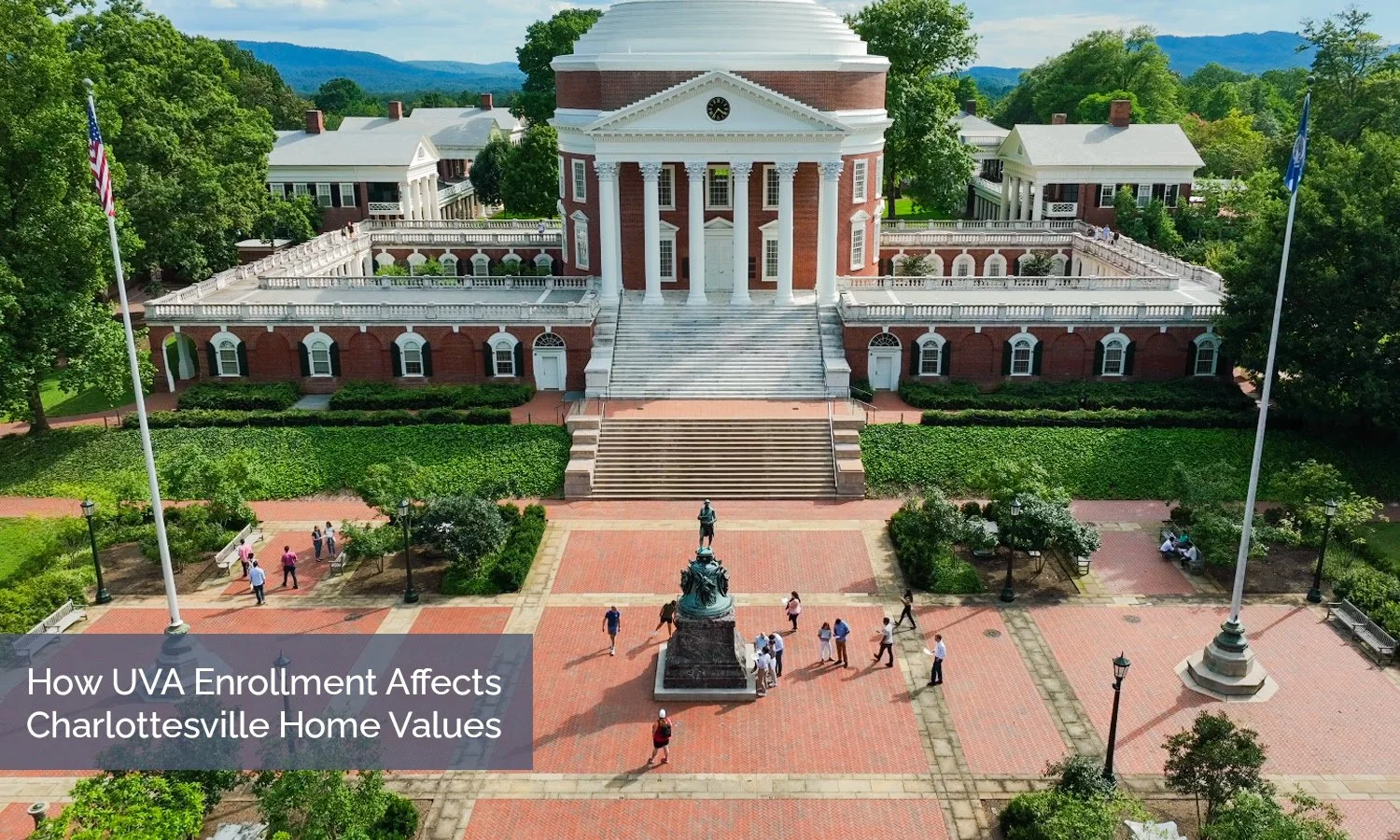
UVA's 25,000 students live in a city with only 50,000 residents. This ratio creates some of the most intense housing competition you'll find anywhere in Virginia. About two-thirds of these students need to find places off campus, and they're all competing with local families, real estate investors and remote workers for the same houses and apartments. The result has been pretty dramatic. Housing costs in Charlottesville shot up 25% between 2021 and 2023, then prices went up another 6.9% just in 2024.
Applications for upper-class on-campus housing have gone through the roof at UVA. We're talking about an 81% jump between fall 2021 and fall 2025. The university has tried to stay ahead by adding new student housing options. The problem is that the construction only added about 700 beds over those four years.
Real estate investors have picked up on this shortage and are snapping up 3-4 bedroom homes anywhere near campus. These properties can pull in $800 to $1,000 per bedroom each month. A standard single-family rental doesn't come close to generating that much income. Parents with the financial means are also buying homes for their kids to live in during college. Alumni view these student rentals as recession-proof investments. Out-of-state buyers continue to submit all-cash bids that exceed asking prices by big amounts.
Albemarle County's median home price hit $535,000 in late 2024 as city prices reached $495,000. That city number represents an 11% increase from the year before. The exact same house can sell for different amounts based purely on how close it sits to campus. A three-bedroom home in Fifeville could go for $100,000 more than an identical house up in northern Albemarle County.
What I want to show you is how enrollment numbers drive up housing demand, which neighborhoods have the biggest price premiums, and what it all means for anyone trying to buy or sell property in Charlottesville. Here's how student numbers directly affect your local real estate market!
Student Numbers and the Housing Math
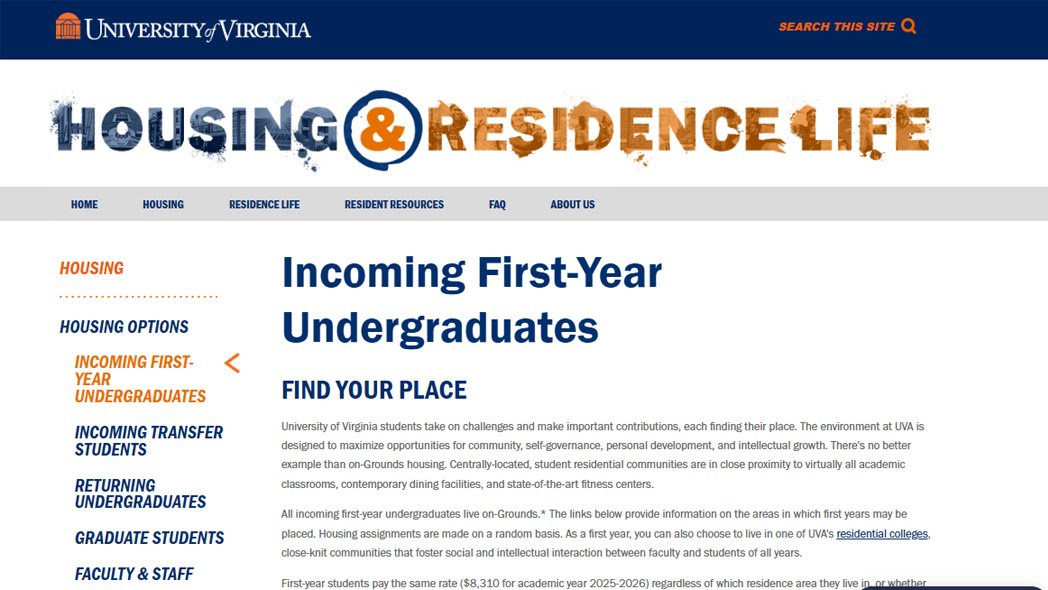
UVA makes every first-year student live on campus, and it takes care of about 4,000 students each year. The problem is that this policy leaves the other 15,000 students to fend for themselves in Charlottesville's housing market. Apartments and houses anywhere near campus are very hard to find, and the situation gets harder every year.
Let me break down the numbers. A 5% enrollment increase at UVA means an extra 1,000 students pour into Charlottesville. Most of them are going to need off-campus housing since dorm space is already maxed out. Most students share houses or apartments with three or four roommates, and that means the community suddenly needs somewhere between 250 and 300 more rental units just to stay even. These units don't appear out of thin air.
Back in 2015, UVA announced they were going to grow enrollment substantially. That decision showed everyone just how fast the housing market can change around a university. They planned to bring in a few thousand more students over just a few years. Property values went up almost immediately after the announcement.
Real estate investors know what they're doing when they target college towns. The steady stream of students who need places to live creates a rental market that practically runs itself. These investors come in with cash and can close deals faster than anyone else, and that puts them way ahead of regular families who have to wait for bank approvals and home inspections. A family with their heart set on a house near campus has almost no shot when an investor walks in ready to close the deal in 10 days without any conditions attached.
The local housing market definitely feels the effects of all this investor activity. Houses that would work great for young families become student rentals with four or five bedrooms instead. Every property that gets turned into a rental means one less home that a family can buy, and when fewer homes go up for sale, prices shoot up on everything else.
Home Prices Drop with Distance from Campus
The relationship between home prices and distance from UVA's campus shows a pattern that's worth understanding for anyone looking to buy or sell in the area. Property values radiate outward from campus almost like ripples in a pond, and this trend holds true across the entire region. The homes that sit closest to the center command the highest prices, and those values start to decrease a bit as you move farther away from campus.
Let me give you a concrete example that drives this point home. Think about two three-bedroom homes with identical floor plans and similar conditions. One of them sits in Fifeville, south of campus. The other one is located way up in northern Albemarle County. That Fifeville home could sell for $450,000 without any problem, and its exact twin up in the county might only bring in $350,000. We're literally talking about the same exact house in every way except location, and yet there's a $100,000 price difference between them.

When you look at hundreds of these transactions, the best distance seems to be roughly 1.5 miles from campus. Homes that fall within this radius always command the highest premiums in the entire market. Areas like the Corner and Rugby Road are perfect examples of this phenomenon in action. The JPA neighborhood also fits this profile. Buyers are willing to pay big premiums for properties where students can walk to class without any problem and without worrying about parking.
What's interesting is that this wasn't the reality for these neighborhoods even just a generation ago. Blue Ridge and Belmont were originally the neighborhoods where factory workers and teachers put down roots. They were families with regular jobs who needed affordable housing near their workplaces. Over the past 20 years, though, these areas have turned into prime student rental zones. And with that, change has come a staggering 200% increase in home values across the board.
Plotting out these price tiers on a map makes the pattern impossible to ignore. Draw a circle around the Rotunda and then continue drawing more circles as you expand outward. Every ring that you draw represents a drop in home prices compared to the one before it. Properties near the Corner routinely sell for $600,000 or more. Move out to the Barracks Road area, and suddenly that same type of home is only worth about $500,000. Go out toward the county line, and the prices drop even more.
Why Student Rentals Are the Best Investment Benefits
Investors who shop for houses near UVA aren't actually shopping for houses at all. What they want are cash-generating machines, and the numbers on these properties are quite impressive. A typical three-bedroom house within walking distance of the campus can command $800 to $1,000 per bedroom each month. Do the math on that and you'll see why investors get so excited about a single property that could generate $3,000 in monthly rent checks.
Traditional landlords in other parts of Charlottesville can only dream about returns like these. Most rental properties in the area deliver maybe 5% annually if the owner is lucky. Student rentals near the campus regularly deliver 7% or 8% returns, and investors certainly understand what these properties are worth. Cash bids come in fast, and they come in high. Sellers usually see bids that exceed the asking price by 10% or 20% and these are all cash deals that close quickly. Typical families who need mortgage approval just can't compete with that level of buying power.
A house on Jefferson Park Avenue shows this situation well. A family walks through and imagines birthday parties in the backyard and holiday dinners in the dining room. An investor walks through the same house and starts calculating the rental income. Three bedrooms at $900 each, along with a finished basement for a fourth tenant, equals $3,500 in monthly revenue. Properties that are closest to the Corner can command $4,000 or more if they have parking.
Most of these investors are UVA alumni who lived through the student rental market themselves. They paid those high rents as undergrads, and they remember just how much their parents were willing to spend for a safe and comfortable place near campus. Out-of-state investors also love these properties because UVA enrollment remains very steady regardless of the economic conditions.
The 2008 recession proved just how resilient this market is. Home values went down hard in college towns across the country. But Charlottesville student rentals barely moved. Parents continued to write rent checks, and students still needed somewhere to live near campus.
When the School Year Drives Home Prices
The academic calendar at UVA actually drives property values throughout the entire Charlottesville area, and local homeowners have learned to expect it. February through May is an especially intense period for real estate activity. Students need to nail down their housing arrangements for the following academic year, as investors want to buy properties before prices increase any further.

It spreads into the regular housing market and drives the prices higher for everyone. A home that goes on the market in March is actually going to sell about 15% faster than if that same exact home were listed in November. But the March listing will also probably sell for about 5% more money.
August brings its own wave of competition to the market when parents flood into town for move-in weekend. Many of these families have already done the math and realized that buying a condo or a house beats four years of rent payments. I watch this same scenario play out every year without fail. All these parents who are snapping up properties at once just drive the competition even higher in a market that's already pretty intense.
Once the summer rolls around, the whole situation changes completely. The students pack up and leave, so the town feels different. More homes become available, and the inventory actually starts to build up a bit. Not as many buyers want to buy when the campus is quiet and most of the students are gone. Savvy buyers have figured out that December and January are the best times to find deals with way less competition.
This seasonal swing is pretty tough on regular families who just need to find a home. Parents with school-age kids have no choice but to shop during the worst time of year. They need to be moved in before school starts, and they have to compete with everyone else and pay top dollar at the exact time when the market is most brutal.
Local Rules and Their Housing Effects
Local laws around UVA have changed the housing market, and they control where students can afford to live. The city has a law that only three unrelated adults can share a house together. On paper, that probably sounds pretty sensible and fair.
The problem is that it creates all sorts of unexpected problems in the housing market that residents don't talk about. The math here is pretty simple. Limiting how many students can share a house means that those students need to rent more houses to accommodate everyone. Five friends who would normally split one place now have to rent two separate homes. These extra student renters spread out into the residential neighborhoods that were traditionally home to families and retirees. A few neighborhoods watched this happen and decided to take action.

Rose Hill is a great example of how this plays out. The HOA there implemented restrictions that were specifically designed to stop student rentals from taking over. Students still need places to live. When one neighborhood blocks them out, they move to the adjacent neighborhoods. Those home values then skyrocket because landlords know that they can charge premium rents to groups of students.
The city also keeps strict protections for historic districts near campus. The preservation of these beautiful areas and their unique character matters. The downside is that developers can't build new apartments in the exact locations where students want to live most. Supply stays flat as the demand from new students increases every year. Prices can only move in one direction under those conditions. The city tried something new back in 2018. Officials approved accessory dwelling units, which are small apartments that homeowners can build in backyards or above garages. It was a great way to add some more housing capacity without massive construction projects everywhere.
Even this small step sparked intense debates about the density near campus versus the traditional neighborhood feel.
Moving to Charlottesville?
You have two different cities that need to share the exact same physical space. The university's growth has created plenty of wealth for some homeowners in the area. At the same time, though, local families can barely afford to buy anything at all anymore. It's been slowly becoming worse for years now, and every person who lives in Charlottesville or who wants to move there has to face it one way or another.
Charlottesville is trying to be two different identities simultaneously, which makes the whole situation interesting to watch play out. The city wants to maintain its reputation as a busy college town with the energy and culture that it brings. Remote workers have found the area, and they love the natural beauty and small-city feel. These two groups want different outcomes from the housing market, and frankly, there might not be enough inventory to satisfy everyone. The property investors can't resist the student rental income and the appreciation possibilities they're seeing. Families who just want to buy their first home are stuck in bidding wars with prices that climb way faster than anybody can save.

UVA's enrollment decisions over the next few years will touch the neighborhoods all across town. The number of students they accept each year matters just as much as interest rates or new listings if you want to know where the market is headed.
Charlottesville could be worth a look if you want a city that's actually grown in a thoughtful way and still has real neighborhoods. Every part of the city has its own character, and the housing market has something that will work for whatever your lifestyle looks like or what you can afford. Justin Landis Group has been helping buyers find the right fit in Charlottesville's different neighborhoods for years. Some buyers want those tree-lined streets in the suburbs where their kids can play outside without worry. Other clients need to be right where everything happens downtown. Our team at Justin Landis Group knows Charlottesville inside and out, and we also know which neighborhoods match what you're after. Give us a call and we'll help you find the Charlottesville home that works.